
Accept reality.
Clarity begins when you stop arguing with what already is.
Choose what matters. Build discipline. Take action.
Musashi’s 21 principles, put into everyday practice.
Three ideas from the guide.
Small enough to begin with today.
Look honestly at the day you actually live. Choose one thing within your control and act on it.
Give your time and attention to what earns its place. Let go of one unnecessary demand.
Choose one direction. Give it a place in your day. Keep returning long enough to improve.
Musashi wrote these principles at the end of his life. This modern reading turns them into practical guidance for attention, discipline and action.
Clarity begins when you stop arguing with what already is.
You keep control of your attention instead of becoming ruled by impulses.
A passing emotion is information, not a command.
Less ego makes room for better judgement and a wider view.
Wanting less protects your focus and makes action cleaner.
Learn from the decision, then return your energy to today.
Measure your progress against your own path, not another person’s life.
Change and loss hurt less when you stop demanding permanence.
Complaint spends energy without improving the situation.
Care deeply without surrendering your direction or discipline.
Adaptability keeps you effective when conditions change.
Your standards should travel with you; comfort should not control you.
Food supports the body. It does not need to become escape or excess.
Fewer possessions create more space, time and attention.
Choose principles consciously instead of copying what everyone else does.
Master what serves your path; avoid collecting for status.
Remembering time is limited makes priorities honest.
Prepare wisely, but do not sacrifice your life to endless accumulation.
Faith can guide you, but responsibility for action remains yours.
Comfort and safety matter less than living without betraying yourself.
Choose your direction and return to it, especially when motivation disappears.
A life shaped by practice, clear judgement and commitment to one chosen path.
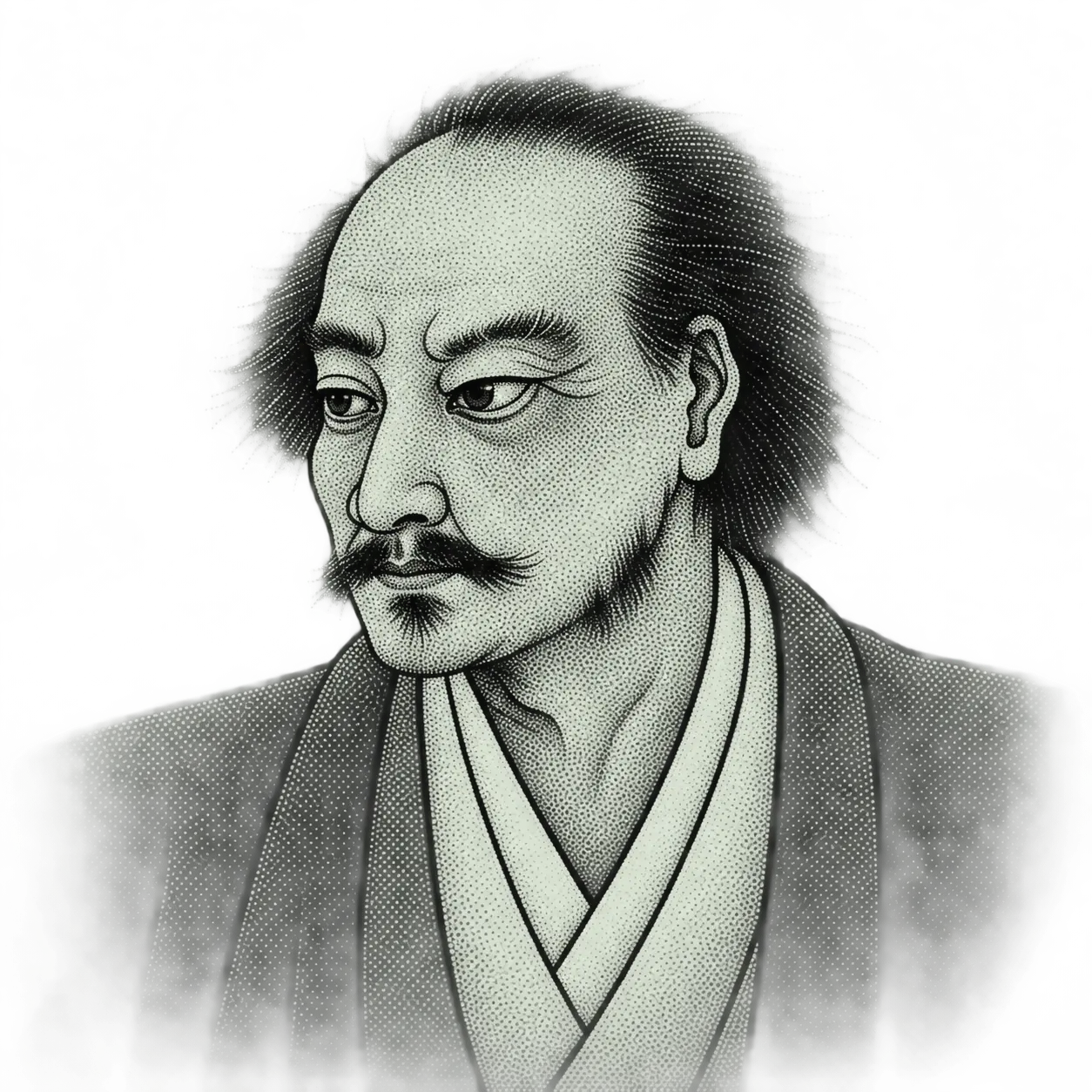
Miyamoto Musashi (c. 1584–1645) was a Japanese swordsman, strategist, artist and writer. He became known for an undefeated record in his duels and for a philosophy built on disciplined practice, observation and adaptability.
He wrote The Book of Five Rings on strategy and, shortly before his death in 1645, the twenty-one principles of the Dokkōdō. Their central demand is simple: govern yourself, remove distraction and remain committed to the Way.
Think lightly of yourself and deeply of the world.
Build what matters through repetition.
See clearly before you react.
Remove what does not serve the path.
21 principles. A clearer direction.